Medical Info Archive

  • Femoral Acetabular Impingement – FAI

    Femoral Acetabular Impingement – FAI

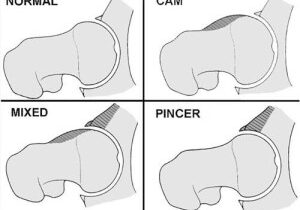
    HIP ARTHROSCOPY: FEMORAL ACETABULAR IMPINGEMENT – FAI Femoral Acetabular Impingement – FAI – is a cause of early osteoarthritis of the hip in young and active people 20-40 years old. It is a result of too much friction in the hip joint. Basically, the ball (femoral head) and socket (acetabulum) rub abnormally creating damage to the [...]

    Read More

  • Hip Arthroscopy

    Hip Arthroscopy

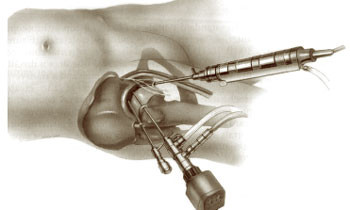
    HIP ARTHROSCOPY Hip arthroscopy is a minimally invasive procedure, which allows rapid post-operative recovery and is useful in the treatment of selected hip disorders in the young, active individual. It allows the surgeon to safely and accurately assess damage to the joint and to perform corrective procedures where required. Special instruments and cameras are passed through small [...]

    Read More

  • Arthroscopic Treatment of Osteochondritis Dissecans of the Knee

    Arthroscopic Treatment of Osteochondritis Dissecans of the Knee

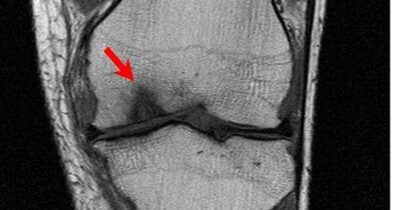
      The following link is to a book chapter authored by Dr. Gillogly and Dr. Langer in “Sports Medicine Surgery” (published in 2010).  The chapter reviews the latest operative treatment for osteochondritis dissecans (OCD lesions) of the Knee. Arthroscopic Treatment of Osteochondritis Dissecans of the Knee

    Read More

  • Thigh Muscle Strains

    Thigh Muscle Strains

     What is a thigh muscle strain? A muscle strain, also called a pull or tear, is a common injury, particularly among athletes. The thigh has three sets of strong muscles: the hamstring muscles in the back, the quadriceps muscles in the front, and the adductor muscles on the inside. The quadriceps and hamstring muscle sets work [...]

    Read More

  • Achilles Tendon Problems

    Achilles Tendon Problems

    The Achilles tendon is the thickest and strongest tendon in the human body. It is a non elastic, fibrous tissue that attaches the calf (gastroc and soleus muscles) to the heel bone (calcaneus). The primary function of the Achilles tendon is to transmit the power of the calf muscles through the foot to allow for [...]

    Read More

  • Ankle Sprains

    Ankle Sprains

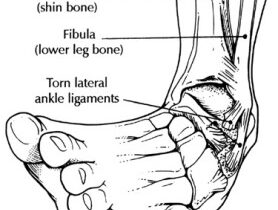
    An ankle sprain is the stretching or tearing of the ligaments that surround the ankle and provide stability to the ankle joint.  Ligaments are structures that connect bones together and restrict motion.  Ankle sprains can vary in severity.  Some sprains are mild and healing occurs in a matter of days.  Some sprains are severe and require [...]

    Read More

  • PatelloFemoral Joint Pain (Runner’s Knee)

    PatelloFemoral Joint Pain (Runner’s Knee)

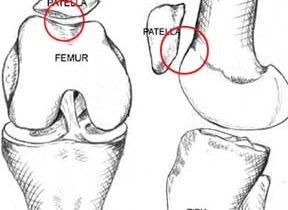
    Pain under the knee cap is the most common symptom of this condition. It is noted mostly when walking up and down stairs and after sitting for a long period. To understand this condition, it is necessary to be aware of the knee cap anatomy. The knee cap (patella) has a groove in the thigh bone (femur) [...]

    Read More

  • Rotator Cuff Injuries and Shoulder Pain

    Rotator Cuff Injuries and Shoulder Pain

    Shoulder Pain: A Common Entity  “News Flash”: You will likely have shoulder pain at some point in your tennis career.  Why? Shoulder pain in overhead athletes is a common entity.  Be it an acute episode following a rocket-like serve/overhead, or a nagging, chronic pain that affects your sleep pattern, the shoulder is vulnerable to injury [...]

    Read More

  • Burners and Stingers

    Burners and Stingers

    What is a burner or stinger?  When the bundle of nerves (brachial plexus) that run from the back of your neck into your arm is stretched or pinched, you can get “burners” and “stingers”. How does it occur? A stinger is almost always seen in contact sports when the head and neck are forcibly moved or hit [...]

    Read More

  • Heat Illness

    Heat Illness

    What is heat illness?             Heat illness is a preventable sports injury that occurs in hot or humid weather.  The body’s ability to cool itself becomes overwhelmed and the body overheats.  Are there different types of heat illnesses?             Yes, heat illness covers heat cramps, heat exhaustion, and heat stroke.  Heat cramps are most common in athletes.  Although [...]

    Read More

  • Low Back Pain

    Low Back Pain

    Don’t underestimate it. Lumbar (lower back) pain affects 75-85% of the population in a lifetime. Most back pain episodes resolve spontaneously. By using cryotherapy (ice), anti-inflammatories, exercising lightly and avoiding the activity that caused the pain, can be beneficial. Unfortunately, chronic (long-term) back pain can be a significant problem for a smaller percentage of the population and [...]

    Read More

  • Turf Toe

    Turf Toe

    What is turf toe? Turf toe is a sprain of the joint where the big toe attaches to the rest of the foot.  The ligaments and soft-tissue that connects that toe to the foot are stretched or torn. How does it occur? Turf toe can result from excessive pushing off of the big toe when an [...]

    Read More

  • Concussions

    Concussions

      What is a sports concussion?                 A sports concussion is a change in awareness, behavior, and/or physical sensations due to a direct blow to the head or elsewhere on the body that transmits a force to the head.  A player does not need to be knocked out to have a concussion.                 The signs and symptoms of [...]

    Read More

  • Neck Pain

    Neck Pain

    We all have woken up with a “crick” in the neck. Fortunately, the pain resolves, especially if we stretch, use moist heat or ice, exercise gently, and use anti-inflammatory medication. But sometimes the “crick” does not resolve, leaving you to battle with muscle spasm and neck stiffness. Additionally the neck and upper back is often the area [...]

    Read More

  • Whiplash

    Whiplash

    Crash! One minute you’re slowing down, the next minute you’ve been rear-ended. Your head bounces forward and snaps back. Pain is not always experienced immediately. Often it takes a 24 hour period for the muscle spasm to increase and the pain to set in. You’re left with a stiff neck, pain and a headache. Initially, it is [...]

    Read More

  • Posture

    Posture

    Posture “Stand up straight! Keep your shoulders back!” Your mother was right. It is important to be conscious of your posture. Postural awareness prevents and alleviates back and neck pain, allows for optimal use of your muscles and reduces fatigue. And, don’t forget, good posture makes you look younger and slimmer. There is really no downside. Atlanta Sports [...]

    Read More

  • Intramuscular Manual Therapy

    Intramuscular Manual Therapy

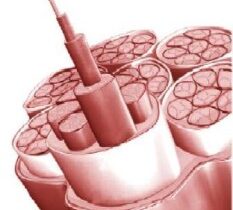
    What is Intramuscular Manual Therapy? Intramuscular manual therapy involves the use of thin, filament needles to release trigger points or “knots” in muscle tissue. This trigger point release allows a dysfunctional muscle to relax completely. Thus, soft tissue repair is accelerated and tendon tension is decreased. The filament needles are thin and cone-shaped, unlike the serrated needles used for injections. [...]

    Read More

  • Sports Hernia

    Sports Hernia

    Atlanta Sports Medicine and Orthopedic Center frequently and successfully treats Sports Hernia or Athletic Pubalgia, which is a common cause of groin pain in athletes.  A sports hernia is the weakening of the inside of the lower abdominal wall, which is believed to be a result of overuse.  Symptoms of sports hernia include a sudden [...]

    Read More

  • Plantar Fasciitis

    Plantar Fasciitis

    Plantar fasciitis, which is irritation and swelling of the fibrous tissue on the bottom of the foot, is one of the most common orthopedic complaints relating to the foot.  The plantar fascia originates at the calcaneus (heel bone) and fans out toward the toes helping to maintain the arch of the foot.  When this inflexible [...]

    Read More

  • Spinal Traction

    Spinal Traction

    Spinal traction is used to “gap” the spinal joints, thereby reducing compressive forces on spinal structures. Think of spinal traction as the opposite of gravity. Spinal Traction can be applied by the therapist’s hands – manual traction– or by the use of a machine – mechanical traction. It can be applied to the neck – cervical [...]

    Read More

  • Manual Therapy Techniques

    Manual Therapy Techniques

    Manual therapy incorporates HANDS-ON techniques. These are aimed at improving joint range of motion; healing soft tissue – including muscles, tendons, and ligaments; reducing scar tissue and inflammation. Manual Therapy is a specific type of physical therapy. Internationally it is referred to as Orthopedic Manual Therapy. Atlanta Sports Physical therapists are specialized in this treatment concept. This [...]

    Read More

  • Calf Strain (Tennis Leg)

    Calf Strain (Tennis Leg)

    Calf Pain in a Recreational Tennis Player: More than Just a Pain in your Heel You stretch to hit the perfect volley when “Pop!” a ball hits you in the back of the leg. Or did it? Pain sears through your calf muscle. There’s no ball in sight. It has probably happened to you or someone [...]

    Read More

  • Adhesive Capsulitis (Frozen Shoulder)

    Adhesive Capsulitis (Frozen Shoulder)

      Global loss of shoulder motion can be a sign of adhesive capsulitis or frozen shoulder. Two main categories of this diagnosis are primary and secondary frozen shoulder. Primary adhesive capsulitis generally has an insidious onset. Three stages are typically involved: gradual loss of motion with increased pain (freezing), significant loss of motion with little pain (frozen) [...]

    Read More

  • Shoulder Instability

    Shoulder Instability

    INSTABILITY  Shoulder instability is excessive movement between the humeral head (ball) and the glenoid (socket) which clinically presents as “a feeling of looseness” or loss of momentum and strength. The shoulder can be unstable anteriorly, posterioly, inferiorly, or a combination of all three termed multidirectional instability (MDI). The direction of instability relates to the relationship of the [...]

    Read More

  • Shoulder Labral Injuries

    Shoulder Labral Injuries

    LABRAL INJURIES  The shoulder is a ball (humeral head) and socket (glenoid) joint.  The socket is extremely shallow, and thus inherently unstable.  The shoulder joint is compared to a golf ball on a tee – the ball (humeral head) is not held in place by the tee (socket).  Thus extra support is needed to stabilize the [...]

    Read More

  • Tennis Elbow and Golfer’s Elbow

    Tennis Elbow and Golfer’s Elbow

       What is it?  Elbow tendonitis is an inflammatory process that is occurring at the inside or outside of the elbow where a group of tendons insert onto the bone.  Inflammation is often associated with significant pain and discomfort with even the most basic of daily activities.  If untreated, it can often lead to a temporary limitation [...]

    Read More